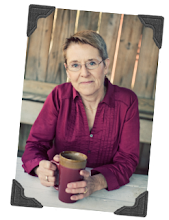
Thank you to Ellen Prewitt, http://ellenprewitt.wordpress.com, for inviting me to be part of this Next Big Thing Blog Roll. Ellen is my friend and an inspiration for my writing. We both love to tell stories and to use words as a way to connect with other people. Ellen inspires people who do not have permanent addresses to feel altogether at home in a writing group she facilitates each week. I have had the good fortune of writing with the group and some of my best ideas have been born there. Ellen is committed to her muse and follows it from one path to another. She works comfortably with fiction, nonfiction and visual art. I appreciate her trust in the creative process and I am grateful that she has included me among the writers on this creative blog roll.
My Next Big Thing could be a memoir, maybe a collection of my sermons, or perhaps a collection of new stories about my childhood. I have a new Christmas story for children that needs to be published and shared. I could choose to do something with my series of photographs: fruits and vegetables dressed up and boldly expressing themselves. I am choosing what seems to be the most significant work and that is a play, a one-woman show, about my experience with family, food, fear and faith. I nearly starved to death before I realized I had the capacity to be loved and well fed. I want to complete this play and perform it as a way to continue my own healing process and to help others experience healing and wholeness.
1. What is the working title of your book (s)?
I am writing a play for a one woman performance. The working title is "Skin and Bones"
2. Where did the idea come from for the book?
The idea for my play came from my own experience with anorexia and bulimia. I stopped eating when I was sixteen years old. I was anorexic for two years and was bulimic for thirteen years. I could not love myself and I wanted to escape from the trap of being myself. I used not eating and binge eating as strategies to avoid feeling anything. My story involves healing and learning to love myself. It saddens me to know that many people struggle with self hate and with eating disorders. It is a shame-based and lonely way to live. I want to stage this story as performance art because I hope it will be a healing experience for audience members. And I expect it to be clarifying for me as I continue on my path toward wholeness.
3. What genre does your book come under?
This will be solo performance and I hope to perform in theater festivals and on stages around the country in small theater spaces. It is my hope that colleges and high schools will invite me to perform for students, faculty and for PTA meetings. I am a firm believer that when one person boldly speaks her truth, she allows the listeners to be liberated, inviting them to speak their own truth as well. Our eating habits are an intimate part of our lives. Family and friends are reluctant to intrude in our food choices and eating habits for fear of disrupting a delicate balance in the relationship. Food and shame can go hand in hand. When they are connected it is a recipe for secrets, silence and denial. Story telling opens the door for healthy conversations to enter into our relationships and set everyone free to feel what they feel and ask for what they need. This play, "Skin and Bones," will be part memoir, part documentary, part therapy and part entertainment.
4. Which actors would you choose to play your characters in a movie rendition?
My hope is that the performance will always be in person, face to face, a real performer and a real audience in the same room. The obvious vulnerability of one human being on stage before others is part of the power of this performance. Following the curtain call and applause, a talk-back session can be as meaningful and memorable as the performance. Either Lily Tomlin, Eve Ensler, Ellen Degeneres or Meryl Streep could perform this piece and bring much public attention to the damage that comes from an eating disorder.
5. What is the one sentence synopsis of your book?
We are given life as a gift and we are fueled to enhance and share that gift by the food on our table and the people around it.
6. Is your book self published, published by an independent publisher, or represented by an agency?
I am a company member with a local theater company, Voices of the South, and our intent is to stage this new work in September, 2013, at TheatreSouth. I will do my best to promote future performances of "Skin and Bones" around the city and across the country. Voices of the South will promote the performance as one of its touring options. Hopefully, I'll have opportunities to perform for a wide variety of audiences.
The September debut of "Skin and Bones" will include an invitation to audience members to register for a Solo Performance Workshop Series at TheatreSouth. Led by writers, actors, dancers, set designers and directors, the workshops will engage participants in shaping their new solo performances. I value telling my stories and I value inspiring others to tell their stories too. The workshop series will involve six workshop sessions and then conclude with a weekend performance for family and friends. Each workshop participant will perform 10-15 minutes of their new piece.
7. How long did it take you to write the first draft of your manuscript?
I began writing this play in the spring of 2010. Jerre Dye, a company member and previous artistic director with Voices of the South, helped me with editing and direction. The work has a strong beginning and I am currently committed to its completion. The first complete draft is yet to be written.
8. What other books would you compare this story to within your genre?
Eve Enslers' "The Good Body" comes to mind, a series of monologues spoken by women who have struggled with their appearance and their weight. This work is both hilarious and extremely painful.
Anna Quindlen's small book, Being Perfect, addresses some of the same issues I hope to raise in my new play. Joan Jacobs Brumberg has written two books, The Body Project: An Intimate History of American Girls and Fasting Girls: The History of Anorexia Nervosa. Both are excellent resources when it comes to thinking about women and our bodies. Geneen Roth's book, Women, Food and God: An Unexpected Path to Almost Everything is a compelling invitation to live freely in our female bodies.
9. Who or what inspired you to write this book?
David Prete, a writer and a director, joined me in writing my first play, "For Goodness Sake." He then directed the performance and designed the set. On opening night, October 9, 2009, while the audience was applauding and I was catching my breath in the dressing room, David came to me and said, "We did a good thing! Listen to that? Can you feel it? We did a good thing!" We were both crying tears of deep joy and gratitude. I'll never forget that moment and I will always be working toward creating the next good thing.
My cousin, Nancy Kendall, also has lived with the challenge to overcome a life threatening eating disorder. She is my friend as well as my family. I admire her. She is an English teacher and a writer, a farmer and a horse trainer. I am writing this play for Nancy and for me. We have beaten the odds and allowed love to set us free.
My daughter, Jennifer Brewer, gave me reason to reconsider whether life is worth living. Her birth gave me a jolt that shook the complacency out of my bones.I saw her burst out of my body and I realized I would be her mother. She had no choice in that. I wanted her to be glad about the mother she had been given. I wanted her to be proud. That changed everything for me. I am writing this play in part because I want Jennifer to have one more reason to feel proud of me.
My beautiful partner, Anna Neal, values and supports my creative energy. Whether I am writing a new piece, proposing a new project, making new friends, developing new skills, preaching sermons, performing on stage, going to jail to listen to the stories of women who are locked inside, traveling to lead spiritual retreats, teaching classes or telling stories...Anna enjoys being my partner. Most of the time she volunteers her service and helps to make things happen well and on time. She loves me in a steadfast way. Her love is what I was starving for so many years ago. I am deeply in love with Anna and indebted to her. She makes it possible for me to do the Next Big Thing.
10. What else about your book might pique the reader's interest?
While eating disorder is a serious subject, the play will not be without humor. I look forward to making the audience laugh. It will be my delight to hear it.
Check out the next participants in this very interesting project:
http://www.writenowcoach.com/blog/
Rochelle Melander and I met in 2005, in Washington DC at the National Cathedral where we had the great privilege of writing for a week. We were invited to spend the week with other writers as we examined what it means to be a writer and a person of faith. At the end of each day, Rochelle and I walked together and we talked about our lives, our families, our work and our dreams. We have remained good friends and writing pals. Rochelle gives me strength when I need it and she asks for my strength when she needs it. We balance well in our friendship. I look forward to learning what her Next Big Thing will be.
www.evergreenyogamemphis.com/blog.php
Leah Nichols and I met in 2009, in a Solo Performance Workshop where both of us were developing new work. Leah is my yoga instructor as well as a writing pal. I am learning in my yoga class how to do my best and be glad even when my best is far from perfect. Leah does not mind telling the truth about her life. I am drawn to her honesty and her good humor. She has been a guest in my writing class at the jail and she connects with the women there, offering them creative inspiration and respect for the stories they have to share. When Leah and I are together, we are a powerful team.We can feel it! I look forward to reading about her Next Big Thing.
Wednesday, March 6, 2013

Sunday, February 24, 2013
Land of the Living
Preached at Prescott American Baptist Church
February 24, 2013
Psalm
27
Philippians
3:17-4:1
The human heart is a muscle. It contracts, squeezing and
releasing, constantly without tiring. A healthy heart beats about 100,000 times
daily. In an average lifetime, the heart will beat 2.5 billion times without
stopping. While we depend on that fist-sized, cone shaped muscle in order to
stay alive—we rarely think of it or take time to express our gratitude toward
the heart for its tireless work on our behalf. It is just there and our
expectation is that it will function adequately and accurately. The muscle
contracts and it sends freshly oxygenated blood through our body, feeding all
of our organs and insuring that we can get out of bed, eat our breakfast, do
our work and live our lives.
There was once a very nice man who washed himself every
morning. He took out each organ every morning, washed them and then put them
back in place. One day the man forgot to put his heart back after he washed it.
People in the neighborhood liked this nice, clean man very much. He had always
been a favorite in town. But when he went outside without his heart, the man
insulted his neighbors. He ignored the needs of the very old and the very
young. He spoke harshly to the beggar on the street corner and pushed him
aside. He got into a terrible argument at the grocery checkout line. The
cashier who had known the man for a long time asked, “What is the problem with
you today?” The man remembered. He had not put his heart back in place after
washing it. So he went home. There was his heart sitting on the table where he
had left it. He put it inside himself and went outside and down the street
apologizing for his heartless behaviors. *
Put your hand on the left side of your chest and feel the
beat of your heart. So ordinary, this beat, beat, beat. So absolutely critical
to our life. I invite you to practice
this, taking a moment to recognize that steady thump in your chest, and allow
that beat to serve as a reminder to you that God is with you. And let that beat also serve as a reminder of
your promise to live in faith that God is with you. Each one of us carries the
treasure of God’s presence.
No matter what, the light and love of God are with us and
within us. As we walk from today and into tomorrow, the presence of God makes a
difference in what we encounter and how we encounter people, places and
problems along the way. In this season
of Lent as we walk with Jesus toward Jerusalem and the cross, we are aware of
frustration, fear, pain and sorrow. Suffering is real. But our journey becomes
tragic only when we choose not to recognize and lean on the ceaseless and
unstoppable presence and power of God along the way.
For about a year, I have gone to a Monday morning yoga
class. I go to Evergreen Yoga Center and join a group of about fifteen other
people who are sitting, standing, bending and stretching together. Our teacher,
Leah Nichols, is good at guiding us into new poses and allowing us to have the
experience of making progress. The practice of yoga has taught me how to find
and use support when poses are challenging.
Yoga practice increases my strength, especially in my legs so I can
stand more firmly. And it has helped me to stay balanced, a very good thing as
we age. It’s that loss of balance which contributes to so many broken hips for
us as senior citizens.
Each class ends with savasana,
a time when we simply relax and allow the floor to hold us. It’s a time when we
can focus on the joy of being, when I can recognize what is essential within
me. There’s a light within each one of us, the presence of God. Each class ends
with the teacher and students bowing their heads toward their hearts and
saying, “Namaste,” which means “The light within me recognizes and honors the
light within you.”
Like the beating heart, the presence of God within us is
something we too often ignore. We forget to pick it up and take it with us when
we go outside. And when we leave our heart at home, we are left vulnerable to
attacks from whatever enemies we might face on the outside.
The psalmist says: “Teach me your ways, O Lord, and lead me
on a level path because of my enemies.” It is assumed that we will encounter challenges
in life and that is why we need to regularly practice focusing on the presence
of God within us. The more we focus on that presence the more light we will
discover within ourselves and the less power our enemies will hold over us.
There was once a farmer who lived long, long ago in a
faraway place. This farmer loved his black and white cows. He made sure the
cows had plenty of green, green grass to eat and lots of fresh cool water to
drink. He called each cow by name and petted them each day. One day the man
went out to milk his cows, as he did every single day, and was shocked to see
that the cows had no milk to give. They were dry. This was a mystery to the
man. The next day the farmer went out to milk his cows and once again
discovered the cows were dry. Their milk was gone. On the third day when the
farmer found his cows to be dry with no milk to give, he decided that there was
a problem. And he made up his mind to see what the problem might be. He hid in
the shrubbery beside his cows and stayed there for the night.
When darkness covered the pasture and the moon was high in
the sky, the man saw a rope drop down from the heavens and three star women
scampered down the rope. The man watched as the three star women raced to his
cows with buckets. They milked his cows and drank the milk. The man realized
all of a sudden that he did not care so much about his cows. He was not
concerned with the milk. He was focused only on the three star women and they
were beautiful! He wanted one.
So the farmer ran out from his hiding place in the shrubbery
and he chased the star women round and round the cows until he caught one. The
other two scampered back to the rope and disappeared. The woman caught in the
farmer’s arms begged, “Let me go! Let me go!”
But the farmer held on tightly saying, “No! I won’t let you
go! I want to marry you!”
And the star woman said, “OK. But on one condition.”
The farmer was delighted, “Anything!”
“I carry a basket with me. You see?” The farmer noticed for
the first time that she had a beautiful basket on her arm. “You must promise me
that you will not look inside the basket until I am ready to share its contents
with you.”
The farmer leaned back and laughed. This was a piece of
cake! “Of course! Of course I promise. Anything! Now please become my bride!”
So the farmer and the star woman were married and they were
happy together. The star woman loved the black and white cows. She called each
cow by name and petted them each day. She took the cows out to pasture and made
sure they had plenty of green, green grass to eat and plenty of fresh cool
water to drink.
One day while the star woman was out in the pasture tending
the cows, the farmer looked at that basket. It was sitting right beside the
front door where she had put it when first they were married. The farmer was
thinking, “We are married. What’s mine is hers and what’s hers is mine. What
could it hurt if I simply look for myself?” And so he leaned over and lifted
the lid on the beautiful basket. He looked inside. “Nothing!”
Absolutely nothing was inside that basket. Empty. All these
years and all this waiting—for nothing!
The wife came in from the pasture. Her face was full of love
as she entered the house. “What a beautiful day! The cows and I have so enjoyed
the sunlight and the breeze. What have you done with your day, husband?”
“I looked in the basket.”
“What?”
“Yes! I looked in the basket.”
“And what did you see?”
“Nothing! I saw nothing. The basket is empty. Look for
yourself!”
“Oh heart of my heart! That basket holds everything!
Everything that I would give to you is in that basket, every treasure I’ve ever
known. It’s all there. And we could have shared it together forever if you had kept your promise to me.”
With that the star woman picked up her basket and went out
into the pasture where a rope dropped down from the heavens. She climbed up the
rope and was gone.
And that was that. *
There are times when we see the basket as empty. We harbor
the voice of the enemy and it tells us that nothing good exists in our
relationship with God. We grow weary with waiting for the Kingdom to come on earth and we lose hope. We can be persuaded that the love of God is not here in
the land of the living.
I invite you to let your beating heart serve as a gentle
reminder that you are a partner to the presence of God in this life. Your
promise to remain aware of God’s love is as much a part of our faith’s
redemptive story as is the promise of God to remain faithful to you.
So let us together practice our focus on the light that lives
within us and we will allow that light to guide us to Jerusalem, into the land
of the living where we stand firm in the presence of God. By staying aware of
God’s presence with us on the journey, we will discover the support, strength
and balance necessary to receive all the gifts and goodness that God longs to
share with us.
Amen
·
Both the “Heartless” story and the “Farmer and
Star Woman” story were found in this book: Our Secret Territory: The Essence
of Storytelling, Laura Simms, Sentient Publications, Boulder, CO 2011
Tuesday, February 5, 2013
Wednesday, January 9, 2013
Dying in the Living Room
Notes
Compiled December 23, 2010-January 10, 2011
Four years went by while my mom was lying in the bed by the window in room 430 at St Peter
Villa here in Memphis. For three years before that she was in a Geri-chair or slumped over in a wheelchair: confused, frightened, verbally rambling and/or tearful. I visited her every day, did her laundry, brushed her hair, kept her hair
trimmed, fed her dinner, sang songs to her, made up funny stories just to make
her laugh and developed trust with all the nursing staff and administrators in
the place. I did what I could to protect and nurture her for seven years when
she could no longer protect and nurture herself. Could I have done more? Certainly I could have. Did I do the best that I could? I did. My mother said (while she could still speak) in her last
years, “I am so glad God gave me a daughter; otherwise I would be all alone.”
She tried to
stop eating three times. It was her only power; she could choose not to eat and
nurture what was left of this physical body. She could still choose not to open
her mouth and accept nourishment for the life she had fallen into, a life in
which she was robbed of her capacity for conversation, reading, gardening,
writing poetry, teaching, taking walks in the woods, playing word games and
playing the piano. She stared at the ceiling blankly. The nursing home staff
insists on putting food in the mouths of residents. It is what they do. Mom has
been too weak to persist in her fragile attempts to escape. I went to her room
and found pureed meatloaf up her nostrils, peaches in her ear, mashed green
peas in the crevice on her skinny neck. It was disgusting. The staff feels
proud because they feed people. There is no analysis of life's quality here. She
is simply not dead yet.
On December
23, 2010 the evening nursing assistant told me, "Your mama is choking bad
on her food again and she's forgetting how to suck through a straw. I don't
know what we gonna do." Something inside of me clicked into place. I had
had enough and I knew that Mom had had more than enough. She stared blankly at
the ceiling as I brushed her hair. I turned off the steady assault of
high-volume TV. "I am going to rescue you, Mom," I promised.
I brought
Mom to our house on Tuesday afternoon, December 28. My partner, Anna Neal, and
I chose to devote ourselves to liberating Mom from the institution and from the
life that no longer knew her as a creative, intelligent, humorous, powerful
woman. My daughter, Jennifer Brewer, helped us set up safe space in the middle
of our home, right in the living room where we watch television, entertain
guests, read books, listen to music, play the piano and eat our meals. We put
Mom in the center of our lives. The medical equipment man brought a hospital
bed. Two paramedics delivered Mom at 3:30 in the afternoon. She started smiling
when she was settled on the bed. She looked around the room with peace,
curiosity and appreciation. The paramedics and hospice people (nurse, chaplain,
social worker) were moved to tears as we all were. She was glad to be in a
protected environment. It might not be her own home back on Jefferson Street in
Dayton, Ohio. It might not be a Nazarene parsonage where she had lived with
each of her two Nazarene husbands. But it was a place where she could feel
absolutely special and loved. It was the best I had to offer.
As we kept
the vigil beside Mom's bed for thirteen days, Mom's decline was surrounded by
love. Rev. Brooks Ramsey came by with hat in hand. (He is the most life-affirming
person I have ever met.) Rev. Cheryl Cornish and her husband, Mark Allen,
stopped by to pass the time with us. Rev. Randall Mullins and his wife, Sharon
Pavelda, sat and shared stories. Friends brought food and flowers day after day:
Nancy Weirs and Laura Harris with Ari, Steve Horton and Bess Robinson, Patty
Crawford and Nan Lemons, Susan Adams, Marsha Walton, Jeannie Mandelker. Neighbors
stopped by just to check on us, invite us to come outside for a breath of fresh
air. I posted entries on my Face Book page and found the supportive comments of
my friends to be encouraging. The online connection kept us from feeling
isolated in our exhausting and rewarding work. I have saved and am sharing
those inspired posts below:
December 28, 2010:
We are
listening to violin and piano: Love Songs. Josef Suk interpreting the best
known works of his grandfather and great-grandfather. It is soothing for Mom
and me.
December 29, 2010:
I highly
recommend restorative yoga. I attended a
class at Evergreen Yoga this evening and it is like excellent medicine for the
spirit, mind and body.
December 29, 2010:
Even though
Mom weighs only 76 pounds, it still takes two to turn her properly. The nursing
assistants can do it by themselves. We're not that experienced at this work.
Turning her every two hours during the day and getting up at 3 am for a
night-time turn.
December 30, 2010:
Anna plays
old fashioned hymns on the piano for Mom's listening pleasure. Music turns on a
flow of tears for all of us. I am lying in the bed beside Mom and singing old
hymns.
December 31, 2010:
Friends are
always a gift. And when it comes to experiences of illness, birth, relocation,
divorce and death: friends are survival tools. I am grateful.
December 31, 2010:
The hospice
nursing assistant came today and gave Mom a bath and changed the bed. We
appreciate the good help.
January 1, 2011:
Prayer shawl
on Mom's shoulders and Brahms sonatas in the air. A tender morning around here.
January 1, 2011:
Just like
the old days-- friends have dropped by to visit, share stories and pass the
time by Mom's bed. I am cheered.
January 1, 2011:
Jennifer
made pot roast for us. Yum!
January 2, 2011:
To care for
the body of the woman who gave birth to me-- even as she transitions into a new
life--is a gift too deep for words. We are both listening to the cello of Yo-yo
Ma.
January 3, 2011:
Like Jacob--
I have wrestled all night with the angel, walked away with a limp and I have
received the blessing of my mother.
January 3, 2011:
Anna was
playing hymns on the piano and mom tried valiantly to sing, "Sweet Hour of
Prayer." It was merely a squeak but an amazing squeak for sure. A river of
tears flows with the music and connects us forever—here and there, now and
then.
January 3, 2011:
This is what
I notice: Life is breath. And letting go of that is a process. I sit beside Mom
and watch. Each inspiration and exhalation is a miraculous exchange of giving
and receiving. The final breath my mother exhales will open the door on new
life. Breath is the key.
I am
learning so much by being here. Thank God for the courage to be here beside
her.
January 3, 2011:
I am so
grateful for Leslie Baker at Aseracare Hospice, my place of employment. Fear
tried to consume me. Leslie graciously answered my questions and provided warm
support. I am better off now. Mom is peacefully snoring. Anna is cooking. All's
well with the world.
January 4, 2011:
An
observation: This being with my mom as she transitions is the most challenging
experience I have ever had. Nothing comes close by comparison. Merely an
observation I made at 5:45 by her bed this morning.
January 4, 2011:
A wonderful
hospice nurse just came for a visit. She checked Mom out, answered our
questions, reassured me and brought more medicine for Mom. Drugs (morphine and Ativan)
are mighty good things when it comes to the dying process.
January 5, 2011:
While death
wags a bony finger from the shadows, inviting me to be scared-- I brush Mom's
hair, adjust her shawl, light a candle, lie in the bed up close to her and
recite memorized scriptures and prayers. I want to see her face when she looks
into the eyes of God. I will not allow death to control the last hours of our
love.
January 5, 2011:
Jennifer is
spending the night with us tonight. She is on the couch.
January 6, 2011:
Today is
Epiphany. As the sun began to rise, Anna heard the Barred Owl barking in a tree
out back. (They really do bark.) She called Jennifer and me to the kitchen
door. As all three of us stood in the dawn, two barred owls, magnificent
creatures, flew over our heads and up into the great oak next door. I believe
they have come to carry Mom's spirit all the way home. They are waiting
patiently for her to complete her process. We stand together in the dark and
pray for patience.
January 6, 2011:
Wish I had a
key to open the door to absolute trust.
January 7, 2011:
I stood in
the early morning stillness and listened to the sounds of breathing. My mother
sleeping in her hospital bed and my daughter sleeping on the couch: the one who
came before me and the one who has come after me. Every breath belongs to God.
January 7, 2011:
My cousin,
Nancy, called from Florida. She's flying here to visit us next weekend.
Hurray!! Family coming in person!!
January 8, 2011:
My mother is
still teaching, facilitating a Ph.D. level course for Anna, Jennifer and me in
this vigil. I am learning to live with the reality of dying.
January 8, 2011:
Being a
nurse is not all that helpful in this end-of-life challenge with my mom. What I
know professionally is almost totally overshadowed by what I feel as her child.
I have to ask for information over and over. Mostly I am asking: Are we doing
this right? Is she pain free?
January 9, 2011:
My mom has
gone home. She chose to worship in heaven today.
January 10, 2011:
Two men
dressed in black came to carry my mother's body away. They are strangers. But
the One who carried my mother's spirit away is as close and intimate a friend
as I will ever have. She is safe, no longer suffering. She is rescued and set
free. Thank God!
Sunday, December 30, 2012
Lost and Found
Luke
2:41-52
Prescott
Baptist Church
December 30, 2012
When I was two years old my mother got sick with
tuberculosis. My father said he could
take care of my three older brothers but he needed help taking care of a baby
girl. So the church women took turns caring for me for two weeks at a time. A
year and a half went by while my mother was sick and recovering. During that
time my mother says that I had a blue overnight case that went with me from
house to house. Mrs. Nalls took me to her house. They had a nice backyard with
a playhouse that their daughter, Helen, had outgrown. Mr. Nalls liked to play
games with me and I thought he was handsome. Mrs. Booth took me for two week stays
and I loved it there because there were three daughters in the Booth family
(Yvonne, Joanne and Dian) and they had so many dolls and tea sets and tables and
good toys to play with. Besides, Mrs. Booth was one of the most loving people I
ever met. Mrs. Haufler took her turn at keeping me for two week intervals. The
Hauflers owned and operated a big farm.
They had cows and horses. The men in the Haufler family wore cowboy hats
and boots. They worked in the field growing peanuts, watermelon and cantaloupe.
Mrs. Haufler took me with her when she delivered lunch and cold water to the
men in the field. My mother was sick but I did not lack for love or nurture. Our
faith community saw to it that I was cared for.
Each household where
I stayed was a Nazarene household, a family I was familiar with from Sunday
worship, Sunday school, Monday night Bible study, Tuesday night visitation of
sick and shut-ins, Wednesday night prayer meeting, and Saturday work days at
the church. Fall and spring revivals. Camp meetings. We knew each other well.
And while there was nothing perfect about my own family or any of the families
that helped to raise me, it was a perfect example of how it takes a village to
raise a child. I went from house to house but the faith tradition of each
household was the same. I was deeply
steeped in the life of my church and the principles and practices of the Church
of the Nazarene. I belonged and I understood that it was more than church women
who claimed me. I belonged to and was claimed by a faith that would care for me
always.
The faith that claims me now is no longer limited to a
particular denomination although the Nazarenes, Methodists and United Church of
Christ have all contributed mightily to making me whole. I’ve also been given
gifts from my relationships with American Baptists, Presbyterians, Episcopalians, Catholics and Unitarians. These days if anyone asks me what church I belong to, I have my
answer ready: I belong to the Church of
Jesus Loves Me This I Know. And I do know. I started knowing it back when
my mother got sick with TB and I was not abandoned. I saw for myself, while I
was totally dependent on others for my survival, that there were matters of
faith that belonged to me. I saw that I could count on being claimed and cared
for. I recognized the abundant gifts of our faith.
Being a community of faith means more than coming together
in a building on Sunday morning. It involves more than administrators in nice
offices in big cities, more than monthly slick magazines. It touches us more
deeply than doctrines and creeds can touch us. As a community of faith we
travel together. We belong together. And as people of faith we create a better
future together.
Luke wants us to know that Jesus was a true Israelite. He
was steeped in the traditions of his faith community. Circumcised on the eighth
day, dedicated to God at six-weeks when his mother was purified, bar mitzvah at
age twelve as well as the Passover pilgrimage to the temple. It was after the
seven day festival and on the return pilgrimage, when Mary and Joseph suddenly
realized, after a day of traveling, that Jesus was not among the friends and
family as they had thought he was. In such a caravan it was not surprising that
a boy among friends and family would not be missed by his parents. He belonged
to the faith community and was claimed by many mothers and fathers in the
crowd.
Hillary Clinton wrote her book, It Takes a Village and
Other Lessons Children Teach Us, in 1996. She describes her childhood as
ideal but not perfect. She was born in
Chicago and spent her childhood in Park Ridge, Illinois where her father owned
and operated a plant that screen-printed and sold drapery fabrics. Hillary’s
father and mother dedicated their time, money and energy to their children and
made sacrifices to give Hillary, Hugh and Tony the tools they would need to
live a better life than the previous generation had lived. They were Methodists
and Hillary writes, “The church was an important presence in our lives.” The
church exposed her to a world beyond her all-white middle-class suburb. She
learned that prejudice against other people was wrong in God’s eyes and God
created different kinds of people on purpose, to enjoy a world with diverse
gifts and beauties.
Clinton writes about our nostalgia for the past, for the
1950’s. We look back longingly as if everything back then was ideal. But, she
says, ask African American children who grew up in a segregated society, or
immigrants who struggled to survive in sweat shops and tenements. Ask women
whose choices were limited by the men in power. Ask those who grew up in
picture perfect houses about the secrets they desperately concealed. The 1950’s
were not as ideal as we wish they were. We look back with rose colored glasses
and that backward longing keeps us from belonging to the possibilities and
gifts of our present life and community. In fact that backward look locks us
into a focus on the deficiencies of our present life and community.
Memphis is home to a staggering number of churches and
religious buildings. The Greater Memphis Metropolitan area contains more than
2,000 churches in total, with all major religious beliefs and denominations
being well represented in the city itself, including Buddhists, Christians,
Hindus, Jews and Muslims. We are all in this city together and our children
need to know that they matter, we claim them and they are invited to belong to
something greater than themselves. They are not alone or abandoned.
While it is true that 39% of our children in Memphis live in
poverty, it is also true that those children belong to us as well as to the
mother and father who gave them biological life. The percentage of Memphis children living in
poverty is double the national rate and steadily increasing. That is true but there are unlimited
possibilities for those children and for each one of us when we stop wringing
our hands and wishing that someone else would come up with a solution that
would meet the basic needs of Memphis children.
What does it mean to value
the family? Is the family defined only as those who have blood kinship?
Only the few who share a mailing address? And can we value a family when we
have diminished them down to nothing more than a troubling statistic?
Jesus was born in a stable, homeless at birth. And then his
parents became fugitives and headed for Egypt in an effort to save their son’s
life from Herod’s slaughter of the innocents. In the midst of these profound challenges the
boy understood himself as a valuable member of a life giving, nurturing faith
community. Judaism claimed him and carried him.
It’s so beautiful to me, this story about the Passover
pilgrimage. Mary and Joseph walked along toward home for an entire day before
they wondered if Jesus was in the crowd. There were any number of mothers and
fathers who might have been walking beside him and Jesus’ parents trusted their
community to claim and care for their son. Discovering Jesus’ absence
frightened Mary and Joseph, of course, and forced them to retrace their steps.
Remember, Jesus was twelve. And when his parent found him he
was in the temple with the elders. Listening. Talking. Receiving wisdom. Giving
wisdom. Jesus’ understanding of his identity
was deepening and growing wider. His distraught parents stare. “Why have you
treated us this way? Didn’t you realize we would be out of our minds with
worry?” And the tensions become obvious as the boy looks blankly at his
parents, “Why were you searching for me? Did you not know that I must be in my
Father’s house?”
He was so lost in belonging to the faith that it was the
only place he could be found. His family
was already larger than his biological parents, his world already wider than
the place where he lived.
You may have read the editorial in yesterday’s Commercial
Appeal, the one written by pediatric surgeon, Kurt Newman. Dr. Newman is
chief executive of Children’s National Medical Center in Washington DC and he
has spent a great deal of time thinking about the larger issues that affect
children and their ability to reach their full potential. He urges us in our
various cities and villages to form task forces, forums and expert panels to
respond to the shootings in Newtown, Connecticut. We must ensure the well-being of our children, he says, or we will have failed the children who were killed on December 14th and those we are still fortunate enough to have in our care.
Where do we begin to keep our children cared for and safe? How do we restore our communities into places of
possibilities and generosity? How do we nurture our children with the gifts
we’ve been given and show them the abundance of good things in life? How do we
help them belong to something more meaningful and rich with faith?
Peter Block has helped to answer those questions in his book, Community: The
Structure of Belonging. He says each one of us needs to take responsibility
for our own part in making the future what we want it to be. Our community
(this city, this particular church) will be restored when citizens and church
members recognize the value of the gifts they have been given and use them to
create safe places for children to be born, grow, play, learn and become
contributing members of the restored community.
When we recognize that although we have been lost as a
people we can be found in the faith we cherish- our children will be less
afraid and less focused on the deficiencies in their lives. When we begin to
live into the abundance of good things we claim, good things like God’s grace
that claims us, when we learn to celebrate our gifts rather than to bemoan what
used to be the good old days—our children will long to belong to the faith that
lights the way. They will travel with their elders: parents, teachers,
neighbors, coaches and friends. We will belong together.
We will all find ourselves lost in the goodness of our faith.
And once we are lost in faith we will be able to find Jesus there-answering our
prayers, listening to our wisdom, affirming our gifts and giving grace back to
us in abundance.
Amen
Interpretation/ Luke, A Bible Commentary, Fred
Craddock, John Knox Press, Louisville, 1990
Community: The Structure of Belonging, Peter
Block, Berrett-Koehler Publishers Inc, San Francisco, 2009
It Takes a Village and Other Lessons Children
Teach Us, Hillary Rodham Clinton, Simon & Schuster, NY, NY 1996
Subscribe to:
Posts (Atom)